Queer Places:
Eton College, Windsor SL4 6DW, United Kingdom
University of Oxford, Oxford, Oxfordshire OX1 3PA
Hotel Rosenlaui, Rosenlaui 387 / 387a, CH-3860 Rosenlaui, Schattenhalb (Haslital), Canton of Bern, Switzerland
University of Birmingham, Birmingham B15 2TT, United Kingdom
St. Anthony's House, Boltern Rd & Turnpike Rd, Marazion TR17 0DH, UK
St. Hilary Churchyard, Penzance TR20 9DQ, United Kingdom
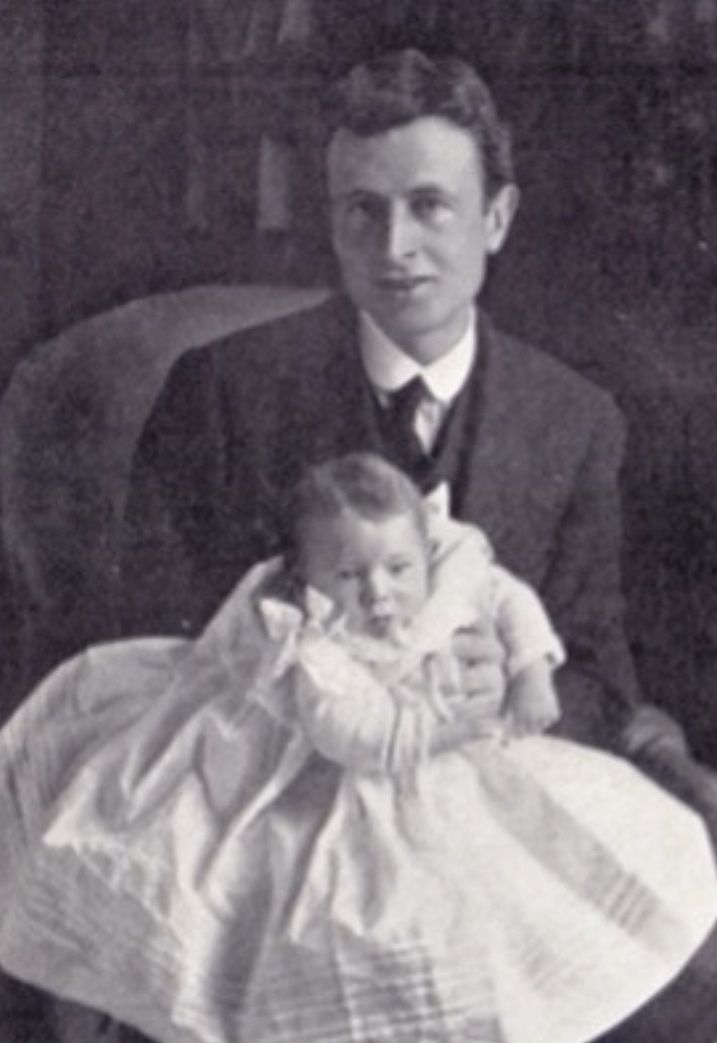 The Honorable Gerard Collier (October 17, 1878 - April 26, 1923) was born on October 17, 1878, at Bigods in Great Dunmow, Essex. As the second son of
Robert Collier, the 2nd Baron Monkswell, and Mary Josephine Hardcastle, he belonged to an influential and wealthy Liberal political family. Educated at
Eton College, he developed an early sense of social responsibility before entering Balliol College, Oxford, in 1898. At Oxford, he earned a first-class
degree in history and established lifelong ties with prominent social reformers and academics, including R. H. Tawney, William Temple, and William
Beveridge. Following his graduation, Collier embarked on an extensive world tour with his younger brother Eric, visiting Japan, Australia, and the penal
colony of Sakhalin off the Russian coast, before briefly lecturing at Sydney University and teaching at Mercers' School in London.
The Honorable Gerard Collier (October 17, 1878 - April 26, 1923) was born on October 17, 1878, at Bigods in Great Dunmow, Essex. As the second son of
Robert Collier, the 2nd Baron Monkswell, and Mary Josephine Hardcastle, he belonged to an influential and wealthy Liberal political family. Educated at
Eton College, he developed an early sense of social responsibility before entering Balliol College, Oxford, in 1898. At Oxford, he earned a first-class
degree in history and established lifelong ties with prominent social reformers and academics, including R. H. Tawney, William Temple, and William
Beveridge. Following his graduation, Collier embarked on an extensive world tour with his younger brother Eric, visiting Japan, Australia, and the penal
colony of Sakhalin off the Russian coast, before briefly lecturing at Sydney University and teaching at Mercers' School in London.
In 1910, Collier married Lily Ermengarde Fanny Grant Duff, daughter of the politician Sir Mountstuart Elphinstone Grant Duff. That same year, he moved
to the University of Birmingham, where he established and tutored the university's first branch of the Workers' Educational Association (WEA),
championing adult education and social mobility for the working class. With the outbreak of the First World War, Collier took a firm stance as a pacifist
and conscientious objector, joining the Fellowship of Reconciliation. His anti-war principles caused significant friction within his aristocratic family,
and the stress of his opposition to the conflict contributed to severe nervous exhaustion and health complications during the war years.
Following the armistice, Collier and his family relocated in 1919 to St. Anthony's House in Marazion, West Cornwall, for health reasons. In Cornwall,
he continued his educational and social activism, serving as a WEA tutor across Camborne and Redruth and working closely with local Quaker communities
and the Anglo-Catholic vicar Father Bernard Walke of St. Hilary Church. Collier actively campaigned against international blockades, campaigned for
Russian famine relief, and co-founded the Industrial Council of the Church to support unemployed Cornish miners following the collapse of the local
mining industry. After returning from a Fellowship of Reconciliation conference in the Netherlands, Collier fell ill with influenza, which rapidly
progressed to muscular paralysis and pneumonia. He died at St. Anthony's House on April 26, 1923, at the age of 44, and was interred in a Grade II listed
chest tomb at St. Hilary Churchyard.
Beyond his educational and social activism, Collier's early adult life intersected with the homosocial and artistic circles of late Victorian and
Edwardian Oxford. During his student years, he formed a close friendship with the botanist, writer, and plant collector
Reginald Farrer. In the summer of 1899, Collier accompanied Farrer on his inaugural botanical expedition to
the Swiss Alps, staying at the Kurhaus in Rosenlaui. They returned to Rosenlaui together in 1901 alongside members of Collier's family, including his
future wife Lily Grant Duff. These alpine journeys formed part of a broader network of intimate male friendships that Farrer cultivated throughout his
life, providing a shared refuge in high-altitude landscapes where aesthetic appreciation, physical endurance, and emotional companionship flourished
outside the moral and social constraints of contemporary British society.
References:
- Walke, Bernard. Twenty Years at St Hilary. London: Methuen & Co., 1935. (Provides firsthand accounts of Collier’s social work, pacifist campaigning, and life in West Cornwall).
- Monkswell, Mary Josephine (Lady Monkswell). A Victorian Diarist: Extracts from the Journals of Mary, Lady Monkswell 1873–1895 & 1895–1909. Edited by the Hon. Eric Collier. London: John Murray, 1944.
- Stocks, Mary. The Workers' Educational Association: The First Fifty Years. London: George Allen & Unwin, 1953.
- Kresen Kernow (Cornwall Archives): Holds local records relating to the Society of Friends (Quakers) in Marazion, the Workers' Educational Association (WEA) Cornish branches, and parish records for St Hilary Church.
- Royal Botanic Garden Edinburgh (RBGE) Archives (GB 235 RJF): Holds personal correspondence between Reginald Farrer and family members referencing his alpine travel with Gerard Collier at Rosenlaui (1899, 1901).
- UK General Register Office (GRO) & National Archives: Official birth certificate (Dunmow, 1878), marriage certificate (Earl Soham, 1910), and death certificate (Penzance, 1923).
- National Register of Archives / British Peerage References: Entries under Baron Monkswell in Burke's Peerage and Debrett's Peerage.
- The Cornishman (1919–1924): Reports on WEA lectures, local industrial relief for miners, pacifist rallies, public notices, and Collier's obituary and funeral coverage (May 1923).
- Western Morning News (May 1923): Detailed account of the funeral and requiem mass held at St. Hilary Church.
- The Highway (WEA Journal, 1911–1923): Contains reports, essays, and references to Collier's tutoring work in Birmingham and Cornwall.
- Historic England Designation Listing: Entry for the Grade II listed Chest Tomb of Gerard Collier in St Hilary Churchyard, Cornwall.
- St Hilary Church Monuments: The Chapel of All Souls reredos memorial and tablet designed by Newlyn School artist Ernest Procter.
Support this project
This website is a passion project researched, developed, and funded entirely by me. If you find the content valuable and would like to help support the ongoing research and hosting costs, any contribution is deeply appreciated.
Thank you for keeping this independent resource alive!
My books on Amazon: Elisa Rolle's books
BACK TO HOME PAGE